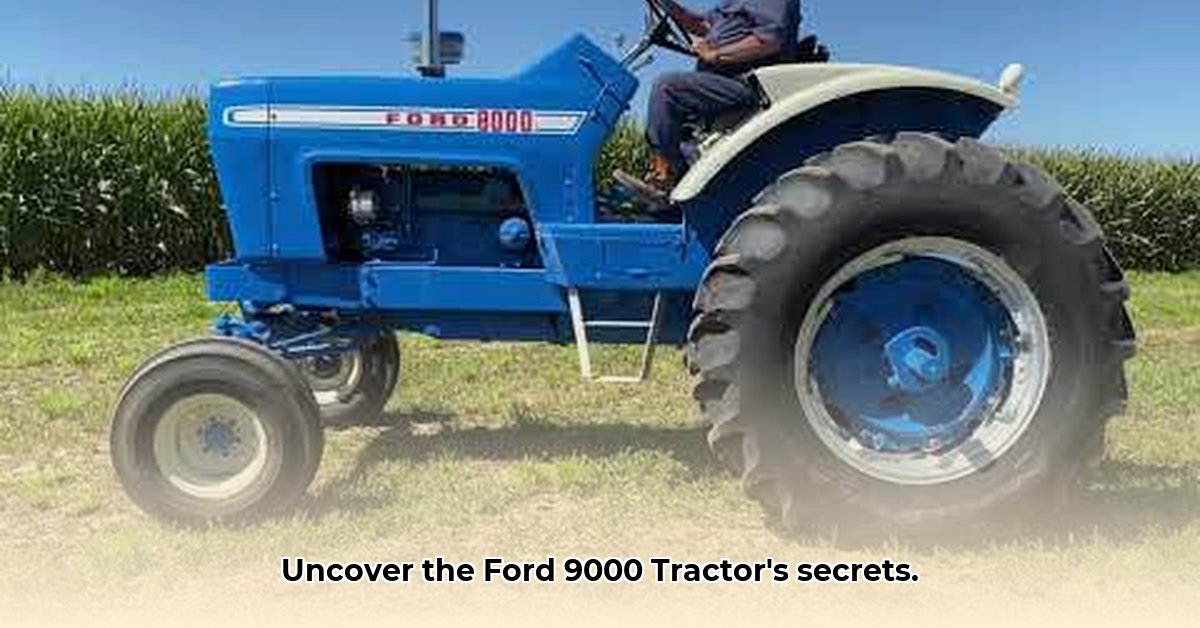
The Ford 9000 tractor, a workhorse of the early 1970s, holds a significant place in agricultural history. This comprehensive guide delves into its technical specifications, historical context, operational aspects, restoration, and collectibility, providing a valuable resource for enthusiasts, farmers, and researchers alike. This guide aims to answer your burning questions about this iconic machine. Did you know its power-shift transmission was revolutionary for its time? For more information on Ford tractor serial numbers, check out this helpful decoder.
Technical Specifications: Power and Precision
The Ford 9000 boasted a potent 6.6-liter six-cylinder diesel engine, delivering power variously reported as 145 hp or 147 PS. This discrepancy highlights the challenges of verifying data for vintage machinery, emphasizing the need for meticulous research across primary sources like original Ford documentation. This powerful engine was paired with either an 8-speed or 16-speed power-shift transmission—a significant technological leap forward offering farmers unparalleled control over speed and power delivery. This wasn’t your grandfather’s clunky gearbox; it was a smooth, precise system capable of handling the demands of diverse agricultural tasks. The precise horsepower figure remains a subject of ongoing research; however, the sheer power is undeniable.
Dimensions and Weight
This wasn't a compact machine; the Ford 9000’s substantial weight, estimated between 9800 and 10320 pounds (approximately 4445 and 4677 kilograms), was crucial for stability and efficiency, especially when working with heavy implements in challenging terrains. This weight, combined with the powerful engine, made it a true workhorse capable of tackling even the most demanding agricultural tasks.
Historical Context: A Giant in its Era
The Ford 9000's production primarily spanned from 1970 to 1972, though some sources extend this to 1976. This era marked a pivotal moment in agricultural mechanization, with diesel engines and power-shift transmissions rapidly gaining popularity. The Ford 9000, offered in both all-purpose (9100) and row-crop (9200) configurations, played a significant role, though its precise market share and competitive standing relative to John Deere and International Harvester require further historical research. How did its features impact farming practices? What was the farmer response to its innovative features? These are questions continuing research aims to answer.
Operational Aspects and Maintenance Challenges
Operating a Ford 9000 requires mechanical aptitude and a commitment to ongoing maintenance. Given its age, certain challenges are inevitable. Regular inspections are vital, and proactive maintenance—including timely oil changes and filter replacements—significantly extends the tractor's lifespan and prevents costly breakdowns. However, what are the most common points of failure on a Ford 9000? Further research is needed to compile a comprehensive maintenance guide and offer practical advice to prevent costly repairs.
Parts Sourcing Strategies
Locating parts for such a vintage tractor can prove challenging. Online forums dedicated to classic tractors, specialized agricultural parts dealers, and even fellow enthusiasts form invaluable resources for sourcing hard-to-find components. Building a network of contacts within the Ford 9000 community is highly recommended.
Restoration and Collection: Preserving a Legacy
Restoring a Ford 9000 is a rewarding yet demanding project requiring mechanical skills, dedication, and patience. A thorough assessment of the tractor's condition is paramount, followed by gathering necessary parts, tools, and reference materials (including a service manual if possible). Safety should always come first when working on vintage machinery. Remember this is a complex process requiring patience and a structured approach.
Step-by-Step Restoration Guide
- Assessment: Carefully evaluate the tractor's condition, identifying areas needing repair or replacement.
- Part Acquisition: Source necessary parts using the strategies outlined above. Be prepared for challenges sourcing rare components.
- Disassembly: Meticulously disassemble components, documenting their location and orientation using photographs or detailed sketches—this will be invaluable when reassembling.
- Cleaning and Repair: Clean parts thoroughly and repair or replace damaged components.
- Reassembly: Reassemble carefully, adhering to the service manual and your documented notes from disassembly.
- Testing and Refinement: Test the restored engine and tractor, making necessary adjustments.
Conclusion: A Lasting Impact
The Ford 9000 remains a compelling subject for collectors and researchers. This tractor represents more than just a machine; it symbolizes an era of profound change within the agricultural industry. Further research into its design, production numbers, and impact on farming practices is essential to fully document its contribution to agricultural history. The Ford 9000 tractor is a testament to both technological innovation and the enduring spirit of the agricultural community. Its story continues to unfold.